
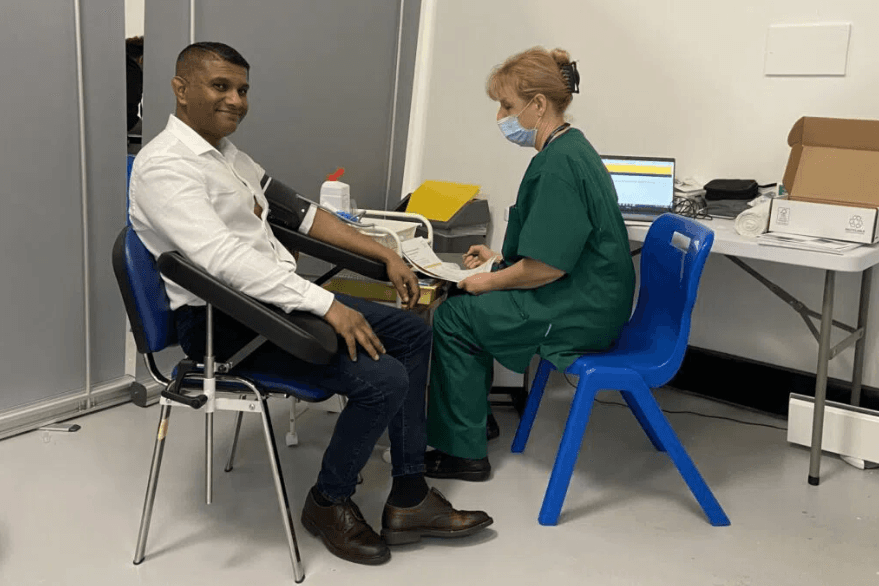
When Malcolm Gill became a full-time carer, he was horribly unprepared for the life he would lead. Now he's joining Our Future Health so that research can change how we view the condition.
Have you ever really thought about dementia? About what it means to be diagnosed with it – or what it's like to care for someone suffering from the debilitating disease?
If you haven't, you probably should. As figures from Alzheimer's UK show, there are 57 million people currently suffering from the disease worldwide – including 900,000 people in the UK. By 2040, it's believed that 1.6 million people in this country will have the disease.
To put it even more starkly: dementia and Alzheimer's regularly ranks as a leading cause of death in the UK. In one way or another, dementia is likely to impact your life – yet many of us are not prepared to deal with it when it hits.
That's precisely what happened to Malcolm Gill. The 46-year-old project coordinator from Croydon began to care for his mother, Elizabeth, nine years ago, after she was diagnosed with vascular dementia. It was an event that opened Malcolm's eyes to life with dementia – and led to him launching a new project to help others deal with the disease.
Caring to the end
"I experienced the carer's journey – what they go through mentally. I had no idea about dementia, so I had to educate myself."
Today, Malcolm remembers a challenging time – emotionally, physically, and financially. The first few years of caring for his mother were difficult, as he struggled to continue work while helping his mother to deal with her disease. She would get lost or confused, often knocking on her neighbours' doors for help.
Malcolm took time off work and moved into her house to become her full-time carer. However, her condition continued to deteriorate. Elizabeth became incontinent and trips outside would make her feel anxious, which in turn led to her suffering depression.
Eventually, Elizabeth was referred to a palliative care hospice. In the end, she never went – Malcolm continued to care for her at home until her final days. "Towards the end, we were at peace with the disease, as there was nothing else anyone could do," he says. Elizabeth died in 2022, aged 81, 12 years after her diagnosis.
A new beginning
Elizabeth's illness changed Malcolm's life. Today, he works for the hospice that his mum was referred to, helping to provide care for people as they reach the end of their lives. And when he's not working at the hospice, Malcolm runs Dignitate, a platform he launched to help educate and support at-home carers.
"Dignitate is a community of carers, because self-isolation can be a huge problem. Once you come to us, we add you into a group where everyone shares their experiences and supports each other. It helps to take away the fear following the diagnosis."
A focus of Dignitate is to help spread awareness of dementia within the South Asian community. As a British Asian, Malcolm explains that he was raised in a culture that perceives dementia as a mental condition rather than a neurodegenerative disease.
"This means we're missing the early signs of dementia. We only recognise it when there's a physical problem, but by that point it's too late and any services that are open to us are useless. The South Asian community is simply not dealing well with dementia."
How dementia impacts South Asians
Recent research found that the South Asian community in the UK has a higher likelihood of developing dementia than the national average. This is thought to be due to South Asians' increased risk of developing other issues, such as diabetes and cardiac disease, which are risk factors for dementia.
In addition, the report concluded that South Asian dementia sufferers are being failed by a system that's designed primarily for the white British population. It found that misdiagnosis was common, often due to patients presenting with symptoms at a young age or having pre-existing conditions such as depression.
Communication was a barrier too, as well as the fact that cognitive testing tools used by medical teams relied on a degree of knowledge about British history, which many South Asian patients don't possess. This is combined with a lack of culturally appropriate care services.
Joining Our Future Health
For Malcolm, Our Future Health offers an opportunity to drastically improve healthcare for all types of dementia sufferers – and consequently also help carers across the country. Our Future Health is committed to building a truly representative group of volunteers, which means new discoveries will benefit diverse groups of people.
"The research is important, especially in terms of dementia. My hope is that it starts to look at a possible genetic link, which might mean we're able to pick it up earlier."
"Joining Our Future Health is like giving a gift. You're giving a gift to the generations below you, to help recognise certain conditions quicker. I'm telling everyone that I'm supporting Our Future Health – my friends, my family, the Dignitate community. By joining this programme, you're helping your daughter, your son, your grandchildren. It will create a better future for everyone."
Want to learn more about supporting dementia research?